US Dollar Increase and Pakistani Rupee Depreciation: Latest Updates on Exchange Rates
USD to PKR
| Amount (USD) | Converted (PKR) |
|---|---|
| 1.000 USD | 279.598 PKR |
| 5.000 USD | 1,397.989 PKR |
| 10.000 USD | 2,795.977 PKR |
| 20.000 USD | 5,591.954 PKR |
| 50.000 USD | 13,979.885 PKR |
| 100.000 USD | 27,959.770 PKR |
PKR to USD
| Amount (PKR) | Converted (USD) |
|---|---|
| 1.000 PKR | 0.004 USD |
| 5.000 PKR | 0.018 USD |
| 10.000 PKR | 0.036 USD |
| 20.000 PKR | 0.072 USD |
| 50.000 PKR | 0.179 USD |
| 100.000 PKR | 0.358 USD |
Open Market Rates
| DATE | BUYING | SELLING |
|---|---|---|
Bank Rates
| DATE | BUYING | SELLING |
|---|---|---|
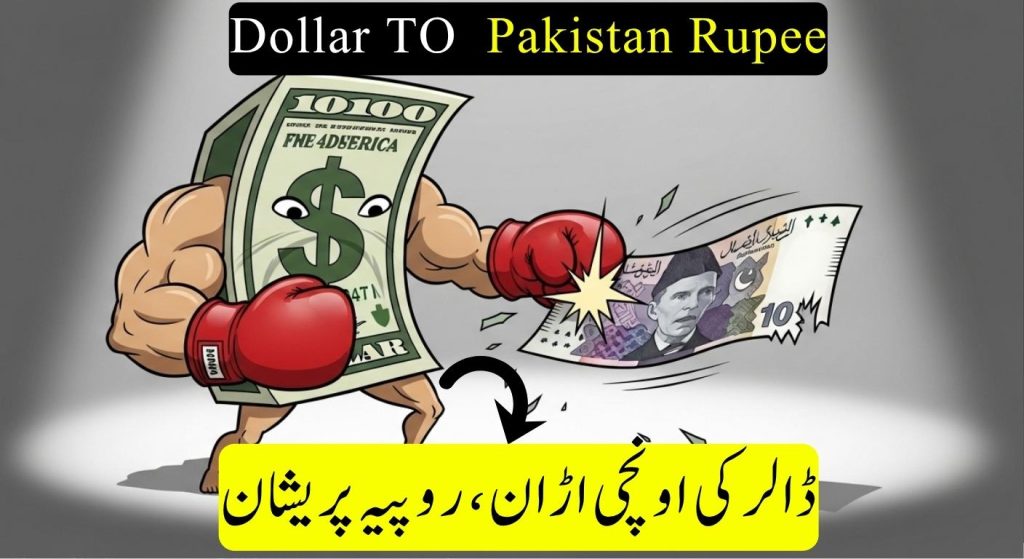
In recent years, the value of the US dollar has increased significantly against the Pakistani rupee. This means that the Pakistani rupee has weakened, and now more rupees are required to buy one US dollar than before. This change has affected businesses, imports, inflation, and the daily lives of people across Pakistan.
Understanding why the dollar increases and why the rupee loses value is important for students, investors, business owners, and the general public.
What Does Rupee Depreciation Mean?
When we say the rupee has depreciated, it means:
- The rupee has lost value compared to the US dollar.
- It now takes more Pakistani rupees to buy 1 US dollar.
For example:
- In 2018, 1 USD was around 110–120 PKR.
- In 2020, it crossed 160 PKR.
- In 2023, it moved above 280 PKR.
- In 2026, it remains around 279–285 PKR (with daily fluctuations).
This shows a clear long-term increase in the dollar rate and a decrease in rupee strength.
Main Reasons Why the Dollar Increased
There are several economic reasons behind the rise of the US dollar in Pakistan.
1. Trade Deficit (Imports Higher Than Exports)
Pakistan imports more goods than it exports. Major imports include:
- Petroleum products
- Machinery
- Vehicles
- Chemicals
- Food items
When Pakistan imports goods, it must pay in US dollars. High imports increase demand for dollars. When demand rises and supply is limited, the dollar becomes more expensive.

2. Foreign Debt Payments
Pakistan has taken loans from:
- International Monetary Fund (IMF)
- World Bank
- Asian Development Bank
- Other countries and institutions
Loan repayments are made in US dollars. When Pakistan needs dollars to repay debt, demand increases, which pushes the dollar rate upward.
3. Low Foreign Exchange Reserves
Foreign exchange reserves help stabilize a country’s currency. When reserves are strong, the central bank can control sudden currency movements.
However, when reserves fall:
- The country cannot control the dollar rate effectively.
- Market pressure increases.
- The rupee weakens.
In recent years, Pakistan’s reserves have faced pressure due to debt repayments and import bills.

4. Inflation in Pakistan
High inflation reduces the purchasing power of a currency.
If prices rise quickly in Pakistan compared to the United States:
- The rupee loses value.
- Investors lose confidence.
- The dollar becomes stronger in comparison.
Pakistan has experienced high inflation in recent years, which contributed to currency depreciation.
5. Political and Economic Instability
Currency markets react to uncertainty.
Factors such as:
- Political changes
- Economic reforms
- IMF negotiations
- Policy uncertainty
can cause investors to move money out of the country, increasing dollar demand and weakening the rupee.
6. Global Dollar Strength
Sometimes the US dollar becomes stronger worldwide due to:
- Higher US interest rates
- Strong US economy
- Global financial uncertainty
When the dollar strengthens globally, developing countries like Pakistan feel additional pressure on their currencies.
Effects of Dollar Increase on Pakistan
The rising dollar rate affects the country in many ways.
1. Increase in Prices (Inflation)
Since Pakistan imports fuel and raw materials, a higher dollar means:

- Petrol prices increase.
- Electricity costs rise.
- Food prices go up.
- Transport becomes expensive.
This directly affects common citizens.
2. Business Impact
Importers face higher costs. As a result:
- Product prices increase.
- Profit margins decrease.
- Business planning becomes difficult.
Small businesses are especially affected.
3. Impact on Overseas Pakistanis
For Pakistanis sending money home:
- A stronger dollar means families receive more rupees.
- Remittances increase in value.
This is one positive effect of dollar appreciation.

4. Government Budget Pressure
When the dollar rises:
- External debt payments become more expensive.
- Government spending pressure increases.
- Budget deficits can widen.
Is Rupee Depreciation Always Bad?
Not always.
Sometimes controlled depreciation can:
- Make exports cheaper.
- Improve trade balance.
- Increase competitiveness.
However, excessive and rapid depreciation creates instability and inflation.
Comparison: Past vs Present
| Year | USD to PKR (Approx.) |
|---|---|
| 2000 | 52 PKR |
| 2010 | 85 PKR |
| 2018 | 120 PKR |
| 2020 | 160 PKR |
| 2023 | 280+ PKR |
| 2026 | 279–285 PKR |
This table shows a long-term weakening trend of the rupee.

What Can Stabilize the Rupee?
Experts suggest several solutions:
- Increase exports
- Reduce unnecessary imports
- Attract foreign investment
- Strengthen foreign reserves
- Improve economic stability
- Control inflation
If these measures are implemented properly, the rupee can stabilize over time.
Conclusion
The increase in the US dollar and the depreciation of the Pakistani rupee did not happen overnight. It is the result of long-term economic challenges, including trade deficits, foreign debt, inflation, and global financial pressures.
Today, the dollar trades around 279–285 PKR, which shows how much the currency landscape has changed over the years.
Understanding these changes helps citizens, businesses, and policymakers make better financial decisions. Currency value reflects the overall health of an economy, and improving economic fundamentals is the key to strengthening the rupee in the future.