Pakistan Government Announces Official Eid ul-Fitr Holidays for 2026
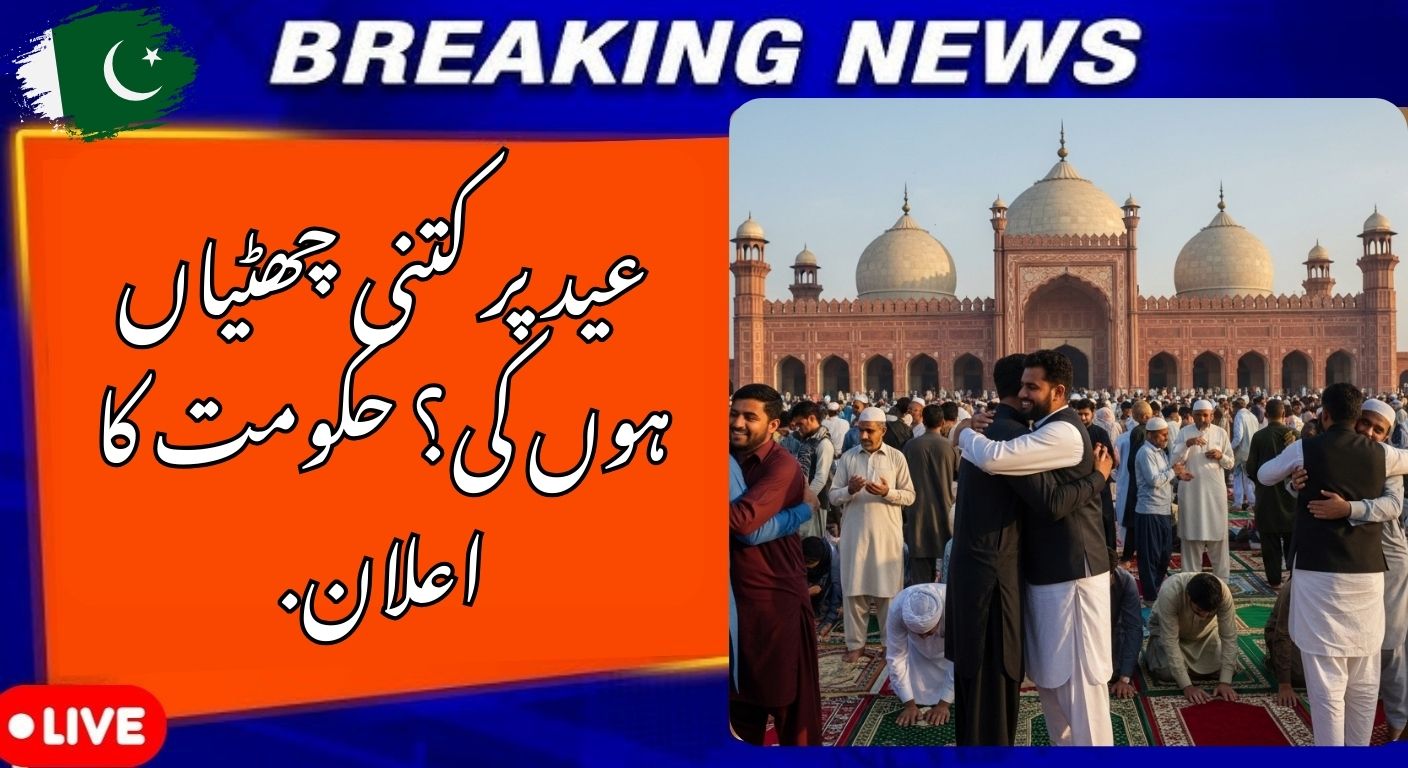
The Government of Pakistan has officially declared public holidays for Eid ul-Fitr 2026, giving citizens across the country time to celebrate one of the most important Islamic festivals. Eid ul-Fitr marks the end of the holy month of Ramadan, a month dedicated to fasting, prayer, self-discipline, and spiritual reflection for Muslims.



Every year, people wait for the official holiday notification so they can plan family gatherings, travel arrangements, and celebrations in advance. For 2026, the government has announced a three-day public holiday schedule for Eid ul-Fitr, allowing families to spend quality time together after a month of fasting.
Official Eid ul-Fitr Holiday Dates for 2026
According to the official notification issued by the Cabinet Division of Pakistan, Eid ul-Fitr holidays for 2026 will be observed on the following dates:
| Day | Date | Occasion |
|---|---|---|
| Saturday | March 21, 2026 | Eid Holiday |
| Sunday | March 22, 2026 | Eid Holiday |
| Monday | March 23, 2026 | Eid Holiday |
These three days have been declared as public holidays throughout the country.


However, it is important to understand that Eid ul-Fitr depends on the sighting of the Shawwal moon. Therefore, while these dates are officially scheduled, final confirmation will be made after the moon sighting announcement by the Ruet-e-Hilal Committee.
How Eid ul-Fitr Date Is Confirmed
The Islamic calendar follows the lunar system. This means the beginning and end of months are determined by the sighting of the new moon.
In Pakistan, the official announcement regarding moon sighting is made by the Ruet-e-Hilal Committee. Once the Shawwal moon is sighted, Eid ul-Fitr is confirmed for the following day.
Although the government announces tentative holiday dates earlier in the year, the final confirmation depends on this official moon sighting declaration. In most cases, the previously announced public holidays remain close to the confirmed Eid date.
Religious Importance of Eid ul-Fitr
Eid ul-Fitr holds deep religious meaning for Muslims. It marks the successful completion of Ramadan, a month in which Muslims fast from dawn to sunset.
Key religious aspects of Eid include:
- Offering the special Eid prayer (Eid Salah) in mosques or open grounds
- Giving Zakat ul-Fitr to the needy before the Eid prayer
- Thanking Allah for strength and patience during Ramadan
- Seeking forgiveness and spiritual renewal
Zakat ul-Fitr ensures that underprivileged members of society can also celebrate Eid with dignity. It reflects the spirit of generosity and social responsibility that Islam promotes.
Social and Cultural Significance in Pakistan
Beyond its religious importance, Eid ul-Fitr is also a major social and cultural event in Pakistan. The holidays allow families and friends to reconnect and celebrate together.
Common traditions during Eid holidays include:
- Visiting relatives and neighbors
- Hosting family dinners and gatherings
- Preparing traditional sweets such as sheer khurma
- Giving Eidi (money gifts) to children
- Wearing new clothes and exchanging greetings
Because many people travel to their hometowns during this period, transport services and bus terminals often experience high demand.
Public and Private Sector Holiday Practice
In Pakistan, Eid holidays usually follow a standard pattern across different sectors.
| Sector | Holiday Practice |
|---|---|
| Government Offices | Close for three official days |
| Public Institutions | Follow government notification |
| Banks | Follow directives from the State Bank of Pakistan |
| Private Companies | Mostly follow government schedule, may vary |
| Schools and Universities | Often close for Eid, sometimes with extra days |
For 2026, it is widely expected that most institutions will observe the announced three-day holiday period.
Why Eid Holidays Matter
Eid ul-Fitr holidays are not simply days off from work. They provide several important benefits:
- Time for physical rest after a month of fasting
- Opportunity for spiritual reflection and gratitude
- Strengthening of family bonds
- Encouragement of charity and social unity
- Boost in local markets and shopping activity
The festive season also increases economic activity, as people spend on clothing, gifts, food, and travel. Markets, shopping centers, and bakeries usually experience a significant rise in customers before Eid.
Travel and Planning Considerations
Because Eid is one of the busiest travel seasons in Pakistan, citizens are advised to plan early.
Important points to consider:
- Book travel tickets in advance
- Expect heavy traffic on highways
- Confirm bank timings before visiting
- Follow official announcements instead of social media rumors
Planning ahead helps avoid inconvenience and ensures a smooth celebration period.
Important Information for Citizens
Here are some key reminders regarding Eid ul-Fitr holidays 2026:
- The government has declared three official public holidays.
- Final confirmation depends on moon sighting.
- Private organizations may adjust leave policies slightly.
- Official notifications should always be checked from government sources.
Staying informed through reliable announcements helps prevent confusion about the exact holiday dates.
Final Overview
Eid ul-Fitr remains one of the most joyful and highly anticipated occasions in Pakistan. For 2026, the Government of Pakistan has officially scheduled a three-day public holiday from March 21 to March 23, subject to moon sighting confirmation.
These holidays provide citizens with valuable time to celebrate the end of Ramadan, offer prayers, perform charity, and reconnect with loved ones. As always, final confirmation will come after the official moon sighting announcement, but preparations across the country are already expected to begin well in advance.
The three-day holiday period is set to bring spiritual happiness, social unity, and festive celebrations to millions of people nationwide.