Pakistan’s First Bullet Train 2026: Lahore to Karachi in Just 5 Hours
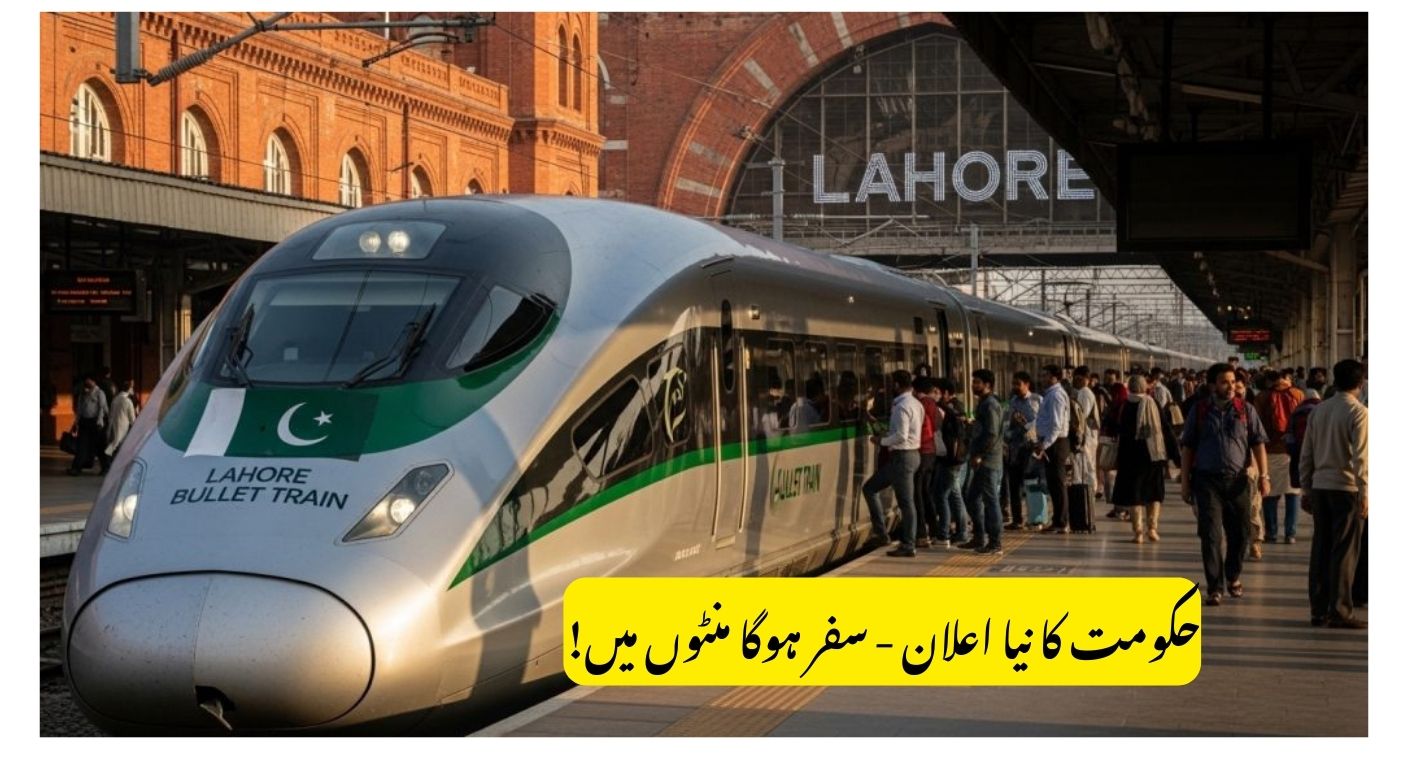
Pakistan is preparing for a major upgrade in its railway sector. The government has confirmed that early construction phases of a high-speed rail project are expected to begin in 2026. The goal is to introduce a modern bullet train service connecting the country’s largest cities by 2030.



If completed successfully, this project could transform intercity travel by reducing travel time, improving passenger comfort, and strengthening economic connectivity. However, the project also faces serious financial and technical challenges.
What Is a Bullet Train?
A bullet train is a high-speed railway system that operates much faster than traditional trains. It uses:
- Specially designed high-speed tracks
- Advanced electric engines
- Modern signaling and communication systems
- Automatic train control technology
- Strict international safety standards
In many countries such as Japan and China, bullet trains operate between 250 km/h and 350 km/h. Pakistan’s proposed system is expected to reach speeds of up to 250 km/h in its initial phase.



Main Route: ML-1 Corridor
The proposed bullet train will follow the Main Line-1 (ML-1) corridor. ML-1 is Pakistan’s most important railway track and forms the backbone of the national rail network.
Major Cities on the Route
- Karachi Cantonment
- Hyderabad
- Multan
- Sahiwal
- Lahore Junction
Total Distance: Approximately 1,215 kilometers
This route connects the southern port city of Karachi to Punjab’s economic centers, making it a strategic national corridor.
Travel Time Comparison
One of the biggest advantages of the bullet train is the reduction in travel time.
Karachi to Lahore Travel Time
| Mode of Transport | Current Time | Expected Bullet Train Time |
|---|---|---|
| Regular Train | 18–22 hours | Around 5 hours |
| Bus | 16–20 hours | — |
| Airplane | 1.5 hours (flight only) | — |
Although flights are quicker in the air, airport check-in, security, and city-to-airport travel increase total journey time. A bullet train would operate from city center to city center, offering a balance of speed and convenience.
Connection with CPEC
The project is closely linked with the China-Pakistan Economic Corridor (CPEC), a major infrastructure partnership between Pakistan and China.
Under this cooperation:
- China may provide technical expertise
- Modern railway technology could be transferred
- Engineers and railway staff may receive training
- International safety standards may be implemented
Upgrading ML-1 has long been part of CPEC’s long-term infrastructure development plan.
Estimated Cost and Investment
High-speed rail systems require significant financial investment.
Projected Financial Overview
- Estimated Total Cost: Around 6.8 billion USD
- Includes:
- Double railway tracks
- Electrification of the line
- Modern signaling systems
- High-speed train sets
- Bridge and underpass upgrades
- Safety monitoring systems
While the cost is high, experts argue that long-term economic benefits could justify the investment.
Project Timeline (Expected)
The timeline may change depending on funding and approvals, but current expectations are:
| Year | Expected Milestone |
|---|---|
| 2025 | Completion of feasibility and planning |
| 2026 | Start of early construction |
| 2027–2028 | Major construction phase |
| 2029 | Testing and trial operations |
| 2030 | Commercial service launch |
If everything proceeds smoothly, public operations may begin around 2030.
Estimated Ticket Prices
Early projections suggest ticket prices may range between:
- PKR 5,000 – 10,000
- Economy Class
- Business Class
The pricing is expected to be:
- Cheaper than airfare
- Faster than buses
- More comfortable than traditional trains
This could make it attractive for business travelers and families alike.
Economic and Social Benefits
The bullet train project could bring major benefits.
1. Faster Travel
- Same-day business trips
- Easier family visits
- Reduced travel fatigue
- Better time efficiency
2. Job Creation
During construction and operation, thousands of jobs could be created in:
- Engineering
- Construction
- Electrical systems
- Train operations
- Maintenance services
3. Economic Growth
- Faster transport of goods
- Reduced logistics costs
- Increased trade between major cities
- Development of industrial zones along the corridor
4. Reduced Road Pressure
- Fewer long-distance buses
- Less highway congestion
- Lower fuel consumption
- Reduced accident risks
Punjab Regional High-Speed Proposal
Apart from the national ML-1 upgrade, the Punjab government has discussed a regional high-speed rail between:
- Lahore
- Rawalpindi
Expected Features
- Travel time around 2.5 hours
- Improved business connectivity
- Tourism growth
- Urban development along the corridor
However, this regional proposal is still in early feasibility stages.
Key Challenges
Large infrastructure projects face serious hurdles.
1. Old Railway Infrastructure
Pakistan’s current railway tracks are not designed for high speeds. Existing infrastructure must be rebuilt or fully upgraded.
2. Financial Pressure
Billions of dollars are required. Funding may involve:
- International partnerships
- Loans
- Public-private partnerships
Securing sustainable financing is a major challenge.
3. Technical and Safety Standards
High-speed rail requires:
- Automatic train control systems
- Modern signaling networks
- Emergency response mechanisms
- Strict safety inspections
Any technical weakness could compromise safety.
4. Administrative Approvals
Environmental approvals, land acquisition, and regulatory permissions must be completed before large-scale construction begins.
Current Status in 2026
As of 2026:
- The project is officially planned.
- Feasibility discussions have been conducted.
- Government-level talks are ongoing.
- Preparations for early construction phases are expected.
However, full commercial operations will require several years of development and testing.
Why This Project Matters
If successfully completed, the bullet train project could:
- Modernize Pakistan’s transport network
- Improve city-to-city connectivity
- Attract foreign investment
- Boost tourism and trade
- Present Pakistan as a developing infrastructure hub
It may also encourage future expansion toward other provinces.
Final Analysis
The proposed bullet train by 2030 represents an ambitious and transformative vision for Pakistan. With speeds of up to 250 km/h and a travel time of approximately five hours between Karachi and Lahore, the system could reshape intercity mobility.
However, significant challenges remain, including financing, infrastructure modernization, and technical readiness. The success of the project will depend on careful planning, transparent management, and consistent political commitment.