US Dollar Increase and Pakistani Rupee Depreciation: Latest Exchange Rate Update
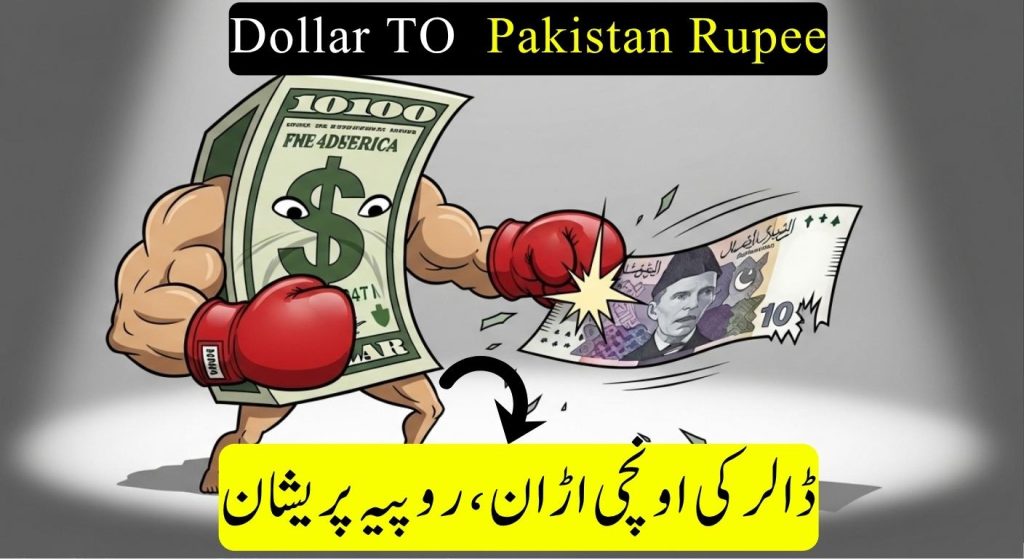
The exchange rate between the US Dollar and the Pakistani Rupee remains one of the most discussed economic topics in Pakistan. On 19 February 2026, the value of 1 US Dollar stands at 279.598 PKR in the interbank market. In the open market, the buying and selling rates are slightly different due to demand and supply conditions.



The continuous increase in the dollar’s value means that the Pakistani rupee has weakened compared to previous years. This change directly impacts businesses, imports, inflation, and the daily lives of citizens.
Today’s USD to PKR Exchange Rate (19/02/2026)
Interbank Rate
| Date | Buying | Selling |
|---|---|---|
| 19/02/2026 | 279.598 | 279.738 |
The interbank rate is mainly used for official banking transactions and large financial dealings.
Open Market Rate
| Date | Buying | Selling |
|---|---|---|
| 19/02/2026 | 279.738 | 282.422 |
The open market rate is usually slightly higher than the interbank rate because it depends on currency demand in the market.



USD to PKR Conversion Table
| Amount (USD) | Converted into PKR |
|---|---|
| 1 USD | 279.598 PKR |
| 5 USD | 1,397.989 PKR |
| 10 USD | 2,795.977 PKR |
| 20 USD | 5,591.954 PKR |
| 50 USD | 13,979.885 PKR |
| 100 USD | 27,959.77 PKR |
PKR to USD Conversion Table
| Amount (PKR) | Converted into USD |
|---|---|
| 1 PKR | 0.004 USD |
| 5 PKR | 0.018 USD |
| 10 PKR | 0.036 USD |
| 20 PKR | 0.072 USD |
| 50 PKR | 0.179 USD |
| 100 PKR | 0.358 USD |
What Does Rupee Depreciation Mean?
Rupee depreciation means that the Pakistani currency has lost value compared to the US Dollar. In simple words, more rupees are now required to purchase one dollar.
For example:
| Year | Approximate USD to PKR Rate |
|---|---|
| 2000 | 52 PKR |
| 2010 | 85 PKR |
| 2018 | 120 PKR |
| 2020 | 160 PKR |
| 2023 | 280+ PKR |
| 2026 | 279–285 PKR |
This long-term trend clearly shows how the dollar has strengthened while the rupee has weakened over time.
Main Reasons Behind Dollar Increase
There are several economic factors responsible for the rise in the US dollar rate in Pakistan.
1. Trade Deficit
Pakistan imports more goods than it exports. Major imports include:
- Petroleum products
- Machinery and equipment
- Vehicles
- Chemicals
- Food items
Since imports are paid in dollars, higher imports increase demand for dollars. When demand rises and supply is limited, the dollar becomes more expensive.
2. Foreign Debt Payments
Pakistan has taken loans from international institutions such as the International Monetary Fund (IMF), World Bank, and other global lenders. Loan repayments are made in dollars, which increases demand for foreign currency and puts pressure on the rupee.
3. Low Foreign Exchange Reserves
Foreign exchange reserves help stabilize a country’s currency. When reserves decline:
- The central bank has less power to control exchange rates.
- Market pressure increases.
- The rupee weakens further.
In recent years, reserve levels have faced pressure due to high import bills and debt repayments.
4. High Inflation
Inflation reduces the purchasing power of a currency. When prices rise rapidly in Pakistan compared to other countries:
- The rupee loses strength.
- Investor confidence declines.
- The dollar becomes relatively stronger.
5. Political and Economic Uncertainty
Currency markets react quickly to uncertainty. Political instability, policy changes, and economic reforms can create pressure on the rupee as investors move their money to safer currencies like the US dollar.
6. Global Dollar Strength
Sometimes the US dollar strengthens globally due to:
- Higher US interest rates
- Strong American economic growth
- Global financial uncertainty
When the dollar strengthens worldwide, developing countries like Pakistan face additional currency pressure.
Effects of Dollar Appreciation on Pakistan
The increase in the dollar rate affects multiple sectors of the economy.
1. Increase in Prices
A stronger dollar makes imports more expensive. As a result:
- Petrol prices rise.
- Electricity costs increase.
- Food prices go up.
- Transportation becomes expensive.
This leads to overall inflation and higher living costs.
2. Business Challenges
Import-dependent businesses face higher costs, which can result in:
- Reduced profit margins
- Higher product prices
- Financial planning difficulties
Small businesses are often the most affected.
3. Impact on Overseas Pakistanis
For overseas Pakistanis sending remittances:
- A stronger dollar means families receive more rupees.
- Remittance value increases.
This is one of the few positive impacts of dollar appreciation.
4. Government Budget Pressure
When the dollar rises:
- External debt repayments become more expensive.
- Fiscal pressure increases.
- Budget deficits may widen.
Is Rupee Depreciation Always Negative?
Not necessarily. Controlled depreciation can sometimes:
- Make exports cheaper in global markets.
- Improve trade balance.
- Increase competitiveness of local industries.
However, rapid and uncontrolled depreciation can cause instability and inflation.
How Can the Rupee Stabilize?
Economic experts suggest several long-term solutions:
- Increase exports
- Reduce unnecessary imports
- Attract foreign investment
- Strengthen foreign exchange reserves
- Control inflation
- Improve economic stability
Sustainable economic reforms and strong financial policies are essential to stabilize the rupee in the future.
Conclusion
The rise of the US dollar against the Pakistani rupee is the result of long-term economic challenges including trade deficits, foreign debt, inflation, and global financial pressures. As of 19 February 2026, the dollar trades around 279–285 PKR, reflecting the ongoing currency trend.