Bangladeshi Taka (BDT) to Pakistani Rupee (PKR) Exchange Rate – 2026 Market Overview
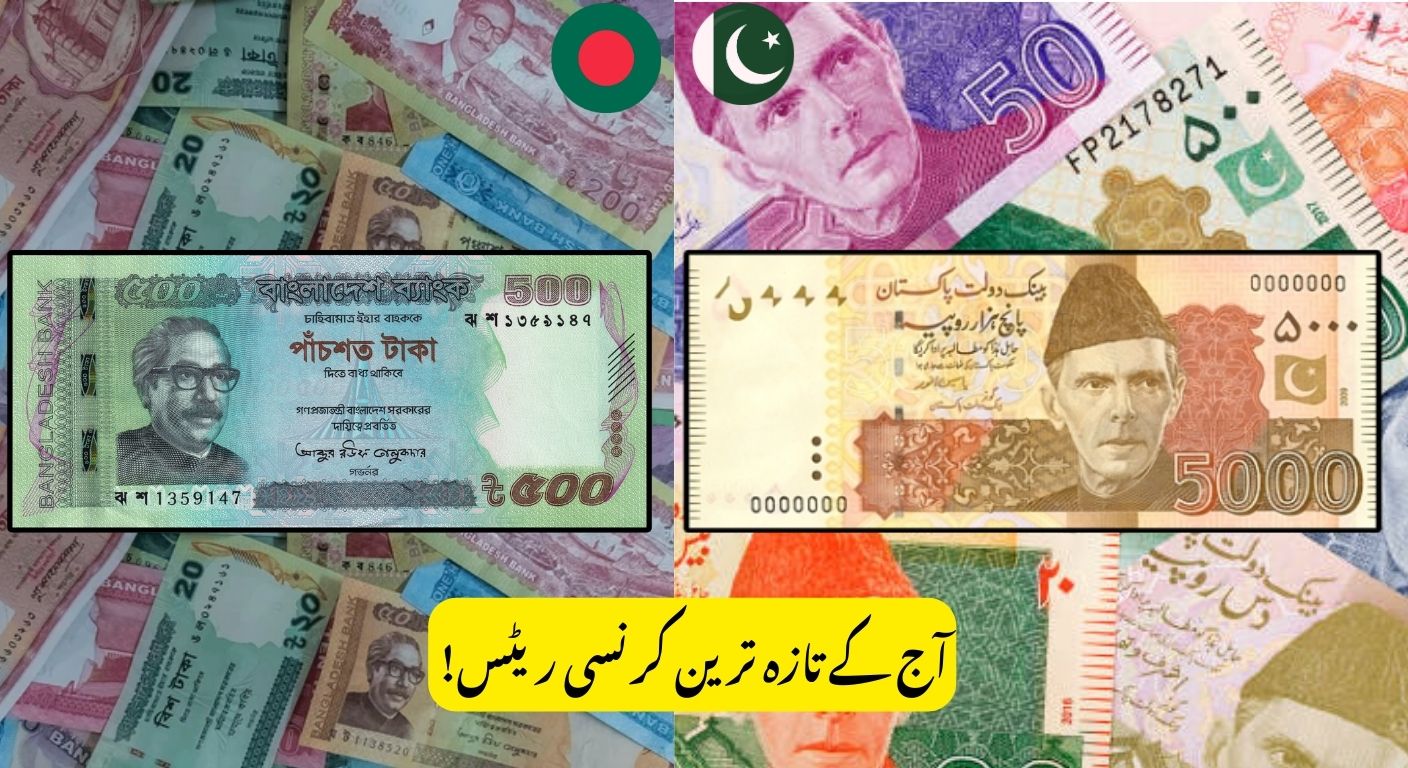
The exchange rate between the Bangladeshi Taka (BDT) and the Pakistani Rupee (PKR) remains an important indicator for people involved in travel, remittances, trade, and business between Bangladesh and Pakistan. According to the most recent data available in early 2026, the taka continues to trade at a relatively stable level against the rupee, with only small day‑to‑day changes observed in both formal banking channels and the open market.

Current Exchange Rates (Latest Update):
Recent market information shows that in the interbank market, where banks and financial institutions trade currency with each other, 1 Bangladeshi Taka is roughly equal to Rs. 2.28–2.30. This rate is generally considered the benchmark for official transactions.
In the open market, where individual currency exchange companies operate, dealers are quoting very similar rates, typically around Rs. 2.29 to Rs. 2.31 for selling. The narrow difference between interbank and open market figures suggests that supply and demand for BDT and PKR remain balanced, and widespread volatility is not present in this currency pair at the moment.
Currency dealers have noted that although minor fluctuations occur on a daily basis, the overall movement of the taka against the rupee has remained within a relatively predictable range recently. This stability provides reassurance to market participants who rely on accurate exchange rate information for financial planning.

Importance of the BDT to PKR Rate:
The interbank rate represents transactions between commercial banks and financial institutions, and it plays a major role in formal remittances, trade payments, and large‑value currency exchanges. The open market rate, on the other hand, reflects real‑time buying and selling activity influenced by cash demand, travel needs, personal remittances, and informal exchanges.
A consistent or narrow gap between these two rates generally points to balanced market conditions, where there isn’t excessive pressure on either currency. This stability can help reduce uncertainty for individuals and businesses that depend on timely and accurate currency conversions.
Impact on Individuals and Businesses:
For travelers moving between Pakistan and Bangladesh, a stable BDT to PKR rate helps estimate expenses such as accommodation, transport, and daily spending more accurately. For families receiving remittances from Bangladesh, knowing the current rate enables them to understand how much rupee value they will receive when their funds are converted.

Importers and exporters involved in goods and services such as textiles, agricultural products, and other commercial items benefit from a stable exchange rate because it allows them to plan costs, set prices, and calculate profit margins with greater precision. Sudden swings in exchange rates can otherwise make budgeting and forecasting more difficult for businesses.
Short‑Term Market Trend:
Recent trading patterns show that the BDT to PKR rate has generally stayed close to Rs. 2.28–2.30 per taka, with minor variations depending on the specific source and time of transaction. These regular, modest movements are typical in normal market conditions and don’t reflect any major disruption in currency flows or demand.
This relative steadiness makes it easier for both individuals and companies to carry out financial planning, including budgeting, savings, and expenditure forecasting, without needing to manage large swings in exchange costs over short periods.

Outlook and Key Influences:
Analysts continue to observe economic and market factors that could affect exchange rate movement in the near future. These include trade volumes between Bangladesh and Pakistan, remittance flows from overseas, foreign exchange reserves held by each country, inflation differentials, and monetary policies implemented by central banks.
While small fluctuations are expected as part of ordinary market operations, the outlook for the BDT to PKR rate remains one of moderate stability unless significant economic events or policy shifts occur in either country. For now, the exchange rate environment is favorable for planning travel, remittance transfers, and business transactions.