Pakistan 2026 Bullet Train Project – A New Era of Fast Travel
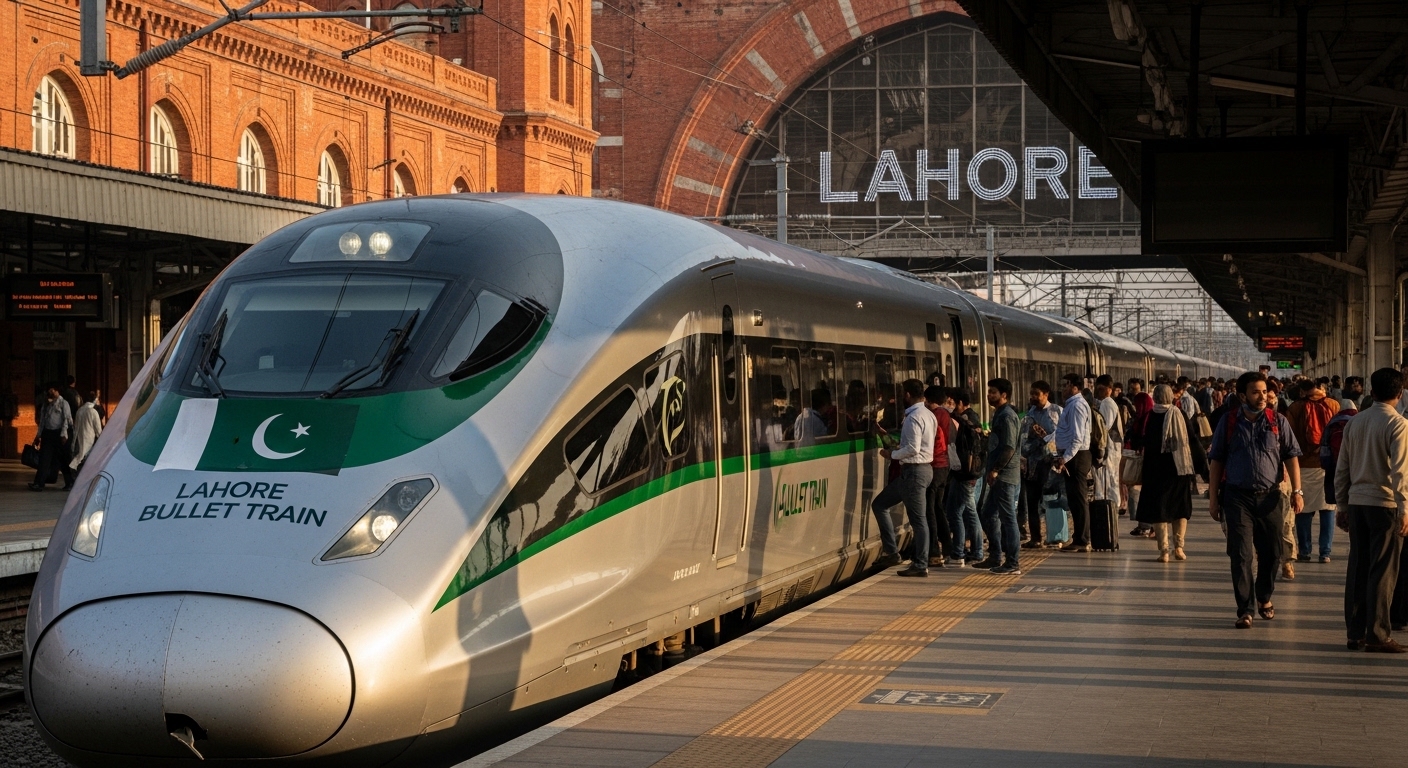
Pakistan is getting ready for one of the biggest transport changes in its history. In 2026, planning and early work is expected to move forward on a high-speed bullet train project. This train aims to connect Pakistan’s largest cities with very fast, modern, and safe rail travel.

If this project is completed successfully, traveling across the country could become easier, quicker, and more comfortable than ever before.
What Is a Bullet Train?
A bullet train is a special type of train that runs much faster than normal trains. Unlike old railway systems, bullet trains use modern tracks, strong engines, and smart signaling systems.
In Pakistan today, a normal train takes:

- 18 to 22 hours to travel from Karachi to Lahore
With the bullet train, the same journey could take:
- Around 5 hours
This means people can travel long distances in just a few hours instead of a full day.
Main Route of the Bullet Train
The planned bullet train route will follow Pakistan’s most important railway line, called Main Line-1 (ML-1).

Planned Route
The train will run through these major cities:
- Karachi Cantonment
- Hyderabad
- Multan
- Sahiwal
- Lahore Junction
Distance Covered
- Total distance: about 1,215 kilometers
This route connects Pakistan’s biggest business, industrial, and population centers.
Connection with CPEC
The bullet train project is part of the China-Pakistan Economic Corridor (CPEC). Under CPEC, China is helping Pakistan upgrade roads, railways, and other infrastructure.

For the bullet train:
- Chinese railway experts are expected to provide technical support
- Modern technology and training will be shared
- The goal is to bring Pakistan’s rail system closer to international standards
Cost of the Bullet Train Project
Building a high-speed railway is expensive.
Estimated Cost
- Total cost: around 6.8 billion US dollars
This cost includes:
- New railway tracks
- Double rail lines
- Strong bridges
- Modern signaling systems
- Safety upgrades
- Faster trains
Although the cost is high, the long-term benefits are expected to be even bigger.
Speed and Travel Time
One of the most exciting parts of this project is speed.

Expected Speed
- Maximum speed: up to 250 km per hour
Travel Time Comparison
RouteCurrent Train TimeBullet Train Time
Karachi to Lahore 18–22 hours Around 5 hours
This will completely change how people plan travel in Pakistan.
Project Timeline (Expected)
The bullet train is a long-term project, not an overnight change.
Expected Timeline
- 2025 – Studies and planning completed
- 2026 – Construction expected to begin
- 2029 – Testing and trial runs
- 2030 – Commercial service launch
These dates may change depending on funding, approvals, and construction speed.

Ticket Prices (Estimated)
Exact ticket prices have not been officially announced yet, but early estimates suggest:
- Economy / Business class: PKR 5,000 to 10,000
This is expected to be:
- Cheaper than airplane tickets
- Faster than buses and trains
- More comfortable for families
How Pakistan Will Benefit from the Bullet Train
1. Faster Travel for Everyone
People will be able to:
- Travel for work and return the same day
- Visit family more often
- Save time and energy
This is especially helpful for businesspeople and students.
2. Job Creation
The project will create:

- Thousands of construction jobs
- Technical and engineering jobs
- Railway staff and maintenance jobs
This will help reduce unemployment.
3. Better Economy and Trade
Modern railways help:
- Move goods faster
- Reduce transport costs
- Increase trade between cities
A stronger railway means a stronger economy.
4. Less Pressure on Roads and Airports
When trains are fast and reliable:
- Fewer people use long-distance buses
- Roads become less crowded
- Domestic flights face less pressure
This helps reduce pollution and traffic accidents.

Punjab’s Regional Bullet Train Idea
Along with the Karachi–Lahore plan, the Punjab Government has also shown interest in a Lahore to Rawalpindi bullet train.
Expected Benefits
- Travel time reduced to about 2.5 hours
- Faster movement between two major cities
- Boost in business and tourism
This project is still in early planning stages.
Challenges Pakistan May Face
While the idea is exciting, there are also real challenges.
Old Railway System
Pakistan’s current railway system:
- Is very old
- Needs major repairs
- Requires complete modernization
Upgrading everything takes time and money.

Funding Issues
- Billions of dollars are needed
- Strong financial planning is required
- International cooperation is important
Without proper funding, delays can happen.
Official Approvals Still Needed
Some parts of the project:
- Are still under discussion
- Need final government approval
- Require clear contracts
This means plans can change over time.
Is the Bullet Train Confirmed?
As of 2026:
- The project is planned and discussed seriously
- Studies and proposals exist
- Final construction contracts are still evolving
So, the bullet train is not a rumor, but it is also not fully operational yet.

Why This Project Matters for the Future
If completed successfully, the bullet train can:
- Change how Pakistan travels
- Bring cities closer together
- Improve quality of life
- Show the world Pakistan’s progress
It is a step toward a modern and connected Pakistan.
Final Thoughts
The Pakistan Bullet Train Project 2026 is a bold and hopeful vision. While full services may begin around 2030, the planning and preparation happening now are very important.
This project is not just about trains. It is about:
- Speed
- Comfort
- Jobs
- Economic growth
- A better future
If managed wisely, the bullet train could become one of Pakistan’s greatest achievements in transport history.